Source: Willem Vandenameele
El material de construcció dels edificis de Selinunte prové de la Cova de Cusa. Aquest és el punt més proper de Selinunte on el llit de calcarenita és prou compacte i massiu com per alliberar característiques tan sorprenents com les del temple G.
Per tallar un bloc o part d'una columna, es va tallar un canal de 45 a 65 cm al seu voltant. Per afluixar el bloc de la part inferior s'utilitzaven falques que s'expandeixen amb aigua .
Des d'allà s'havien de transportar els elements constructius fins al lloc. Un mètode habitual era utilitzar grans rodets de fusta sobre els quals s'enrotllaven les pedres. Però també s'utilitzaven carros especialment dissenyats per transportar pedres per les carreteres. Aquests carros sovint tenien grans rodes de fusta i eren tirats per persones, animals o fins i tot pel vent.
Source: Willem Vandenameele - ChatGPT
 | | Public | Dutch • English • French • German • Italian • Spanish

Select one of the most popular activities below or refine your search.
Discover the most beautiful and popular trails in the area, carefully bundled into appropriate selections.
Source: Willem Vandenameele
Select one of the most popular categories below or be inspired by our selections.
Discover the most beautiful and popular attractions in the area, carefully bundled in appropriate selections.
Source: Willem Vandenameele
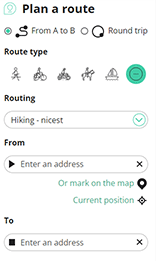
With RouteYou, it's easy to create your own customised maps. Simply plot your route, add waypoints or nodes, add places of interest and places to eat and drink, and then easily share it with your family and friends.
Route planner
<iframe src="https://plugin.routeyou.com/poiviewer/free/?language=en&params.poi.id=8654803&params.language=ca" width="100%" height="600" frameborder="0" allowfullscreen></iframe>

More than 10,100,000 routes

More than 15,000,000 users

More than 4,500,000 points of interest

Kerkstraat 108
9050 Gentbrugge, Belgium
© 2006-2025 RouteYou - www.routeyou.com