Source: Willem Vandenameele
La primitiva iglesia debió construirse hacia mediados del siglo XIV , dando respuesta a la estética mudéjar que imperaba en las iglesias sevillanas de la época.
El paso del tiempo y los daños causados por el terremoto de Lisboa de 1755 obligaron a su demolición y posterior reconstrucción, que finalizó en octubre de 1841 . La iglesia de estilo neoclásico tiene dos fachadas. La fachada principal es muy monumental y tiene la particularidad de tener dos torres dobles que albergan un pequeño atrio.
El interior consta de tres naves con crucero y presbiterio. El retablo mayor contiene las estatuas de San Ildefonso en el centro y San Pedro y San Pablo en los laterales.
Source: Willem Vandenameele
 | | Public | Catalan • Danish • Dutch • English • French • German • Italian

Select one of the most popular activities below or refine your search.
Discover the most beautiful and popular trails in the area, carefully bundled into appropriate selections.
Source: Willem Vandenameele
Select one of the most popular categories below or be inspired by our selections.
Discover the most beautiful and popular attractions in the area, carefully bundled in appropriate selections.
Source: Willem Vandenameele
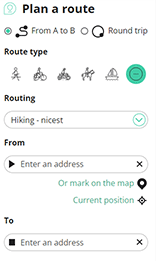
With RouteYou, it's easy to create your own customised maps. Simply plot your route, add waypoints or nodes, add places of interest and places to eat and drink, and then easily share it with your family and friends.
Route planner
<iframe src="https://plugin.routeyou.com/poiviewer/free/?language=en&params.poi.id=8741980&params.language=es" width="100%" height="600" frameborder="0" allowfullscreen></iframe>

More than 10,100,000 routes

More than 15,000,000 users

More than 4,500,000 points of interest

Kerkstraat 108
9050 Gentbrugge, Belgium
© 2006-2025 RouteYou - www.routeyou.com