The summit is named after its shape, which resembles a head with a fez on it, a type of headgear that was commonly worn during the first ascent of the summit in 1905 in the then Ottoman Empire and thus was associated with Turks in Central Europe.
Unlike the widely visible valley guardian, the neighboring Turk's Head is hardly recognizable from Rathen, as it does not stand out from the field stones and honey stones behind it. With a maximum wall height of 45 meters on the valley side, it is slightly smaller than the valley guardian and the directly adjacent eastern field peak, where the height in the mountain-side notch is only 20 to 25 meters. The distinctive shape of the summit top, which rests on a broad base, is only clearly visible from close up or from a viewpoint above the summit.
Risorsa: Wikipedia.org
Diritti d'autore: Creative Commons 3.0
 | | Pubblica | Danese • Francese • Italiano • Olandese • Spagnolo • Tedesco

Seleziona una delle attività più popolari qui sotto oppure affina la ricerca.
Scopri gli itinerari più belli e popolari della zona, accuratamente raggruppati in apposite selezioni.
Seleziona una delle categorie più popolari qui sotto o lasciati ispirare dalla nostra selezione.
Scopri i luoghi di interesse più belli e popolari della zona, accuratamente raggruppati in apposite selezioni.
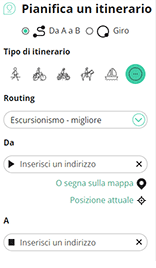
Con RouteYou puoi creare facilmente mappe personalizzate. Traccia il tuo itinerario, aggiungi waypoint o nodi, luoghi di interesse e di ristoro, e condividi le mappe con la tua famiglia e i tuoi amici.
Pianificatore di itinerari
<iframe src="https://plugin.routeyou.com/poiviewer/free/?language=it&params.poi.id=7587339&params.language=en" width="100%" height="600" frameborder="0" allowfullscreen></iframe>

Più di 10.100.000 itinerari

Più di 15.000.000 utenti

Più di 4.500.000 luoghi d'interesse

Kerkstraat 108
9050 Gentbrugge, Belgio
Contatta il nostro team di assistenza clienti o visita il nostro centro assistenza.
© 2006-2026 RouteYou - www.routeyou.com