The summit is named after its shape, which resembles a head with a fez on it, a type of headgear that was commonly worn during the first ascent of the summit in 1905 in the then Ottoman Empire and thus was associated with Turks in Central Europe.
Unlike the widely visible valley guardian, the neighboring Turk's Head is hardly recognizable from Rathen, as it does not stand out from the field stones and honey stones behind it. With a maximum wall height of 45 meters on the valley side, it is slightly smaller than the valley guardian and the directly adjacent eastern field peak, where the height in the mountain-side notch is only 20 to 25 meters. The distinctive shape of the summit top, which rests on a broad base, is only clearly visible from close up or from a viewpoint above the summit.
Source: Wikipedia.org
Copyright: Creative Commons 3.0
 | | Public | Danish • Dutch • French • German • Italian • Spanish

Select one of the most popular activities below or refine your search.
Discover the most beautiful and popular trails in the area, carefully bundled into appropriate selections.
Select one of the most popular categories below or be inspired by our selections.
Discover the most beautiful and popular attractions in the area, carefully bundled in appropriate selections.
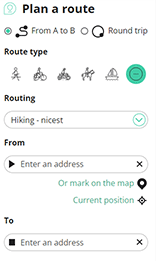
With RouteYou, it's easy to create your own customised maps. Simply plot your route, add waypoints or nodes, add places of interest and places to eat and drink, and then easily share it with your family and friends.
Route planner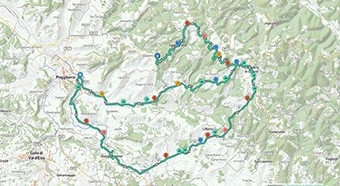
<iframe src="https://plugin.routeyou.com/poiviewer/free/?language=en&params.poi.id=7587339" width="100%" height="600" frameborder="0" allowfullscreen></iframe>

More than 10,100,000 routes

More than 15,000,000 users

More than 4,500,000 points of interest

Kerkstraat 108
9050 Gentbrugge, Belgium
© 2006-2025 RouteYou - www.routeyou.com