The museum displays four by John Harrison developed marine chronometers. These were used to calculate the longitude while travelling over the sea. Comparing the local time with the time on the chronometer with the time from 'home' or a reference point, allowed the travellers to calcaulted the longitude on Earth.
Until 1760, there were no accurate clocks who could travel over sea. In 1707, a large part of the English fleet had been wrecked on a reef. This triggered the Admiralty. They promissed a reward of £ 20,000 for a more reliable chronometer. In 1736, the unknown watchmaker John Harrison created Timekeeper No. 1. The clock was about one meter high and weighed 36 kg. The Admiralty found the monster too big and clumsy. So the brilliant Harrison built in 1760 a new one.
Eleven years later the chronometer was proven at sea and Harrison received the promised £ 20,000.
 | | Publiek | Duits • Frans • Nederlands
Adres: Greenwich, Verenigd Koninkrijk
Statistieken
Selecteer hieronder één van de populairste activiteiten of verfijn je zoekopdracht.
Ontdek de mooiste en meest populaire routes in de buurt, zorgvuldig gebundeld in passende selecties.
Bron: A.B. Clayton
Selecteer hieronder één van de populairste categorieën of laat je inspireren door onze selecties.
Ontdek de mooiste en meest populaire bezienswaardigheden in de buurt, zorgvuldig gebundeld in passende selecties.
Bron: A.B. Clayton
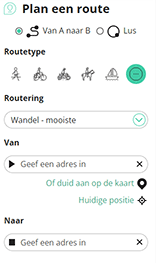
Met RouteYou kan je eenvoudig zelf aangepaste kaarten maken. Stippel je route uit, voeg waypoints of knooppunten toe, plan bezienswaardigheden en eet- en drinkgelegenheden in en deel alles met je familie en vrienden.
Routeplanner
<iframe src="https://plugin.routeyou.com/poiviewer/free/?language=nl&params.poi.id=669956&params.language=en" width="100%" height="600" frameborder="0" allowfullscreen></iframe>

Meer dan 10.100.000 routes

Meer dan 15.000.000 gebruikers

Meer dan 4.500.000 trekpleisters

Kerkstraat 108
9050 Gentbrugge, België
Neem contact op met ons klantenserviceteam of bezoek ons helpcentrum.
© 2006-2025 RouteYou - www.routeyou.com