The museum displays four by John Harrison developed marine chronometers. These were used to calculate the longitude while travelling over the sea. Comparing the local time with the time on the chronometer with the time from 'home' or a reference point, allowed the travellers to calcaulted the longitude on Earth.
Until 1760, there were no accurate clocks who could travel over sea. In 1707, a large part of the English fleet had been wrecked on a reef. This triggered the Admiralty. They promissed a reward of £ 20,000 for a more reliable chronometer. In 1736, the unknown watchmaker John Harrison created Timekeeper No. 1. The clock was about one meter high and weighed 36 kg. The Admiralty found the monster too big and clumsy. So the brilliant Harrison built in 1760 a new one.
Eleven years later the chronometer was proven at sea and Harrison received the promised £ 20,000.
 | | Public | Danish • Dutch • French • German • Italian • Spanish
Address: Greenwich, United Kingdom
Statistics
Select one of the most popular activities below or refine your search.
Discover the most beautiful and popular trails in the area, carefully bundled into appropriate selections.
Source: A.B. Clayton
Select one of the most popular categories below or be inspired by our selections.
Discover the most beautiful and popular attractions in the area, carefully bundled in appropriate selections.
Source: A.B. Clayton
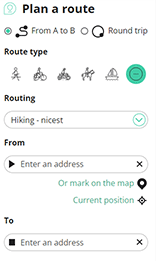
With RouteYou, it's easy to create your own customised maps. Simply plot your route, add waypoints or nodes, add places of interest and places to eat and drink, and then easily share it with your family and friends.
Route planner
<iframe src="https://plugin.routeyou.com/poiviewer/free/?language=en&params.poi.id=669956" width="100%" height="600" frameborder="0" allowfullscreen></iframe>

More than 11,800,000 routes

More than 15,000,000 users

More than 4,500,000 points of interest

Kerkstraat 108
9050 Gentbrugge, Belgium
© 2006-2026 RouteYou - www.routeyou.com