Around the hunting pavilion, you will exceptionally find a number of thicker, old trees. These are trees that have survived the war cuttings. During World War I, the German occupiers had almost all the large trees cut down, and the forest was nearly destroyed. This was partly for wood in the trenches. After the war, the estate was placed under sequestration, and in 1930 it came into the possession of the Belgian State, as a form of war damage compensation. The forest was finally reforested between 1930 and 1950, which explains its relatively youthful aspect. As a result, old thick trees are scarce throughout the Hallerbos.
Source: Wikipedia, INBO
 | | Public | Danish • Dutch • French • German • Italian • Spanish
Address: Hallerbos
Statistics
Select one of the most popular activities below or refine your search.
Discover the most beautiful and popular trails in the area, carefully bundled into appropriate selections.
Select one of the most popular categories below or be inspired by our selections.
Discover the most beautiful and popular attractions in the area, carefully bundled in appropriate selections.
With RouteYou, it's easy to create your own customised maps. Simply plot your route, add waypoints or nodes, add places of interest and places to eat and drink, and then easily share it with your family and friends.
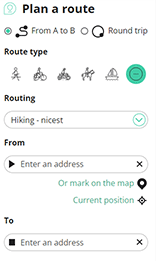
Route planner
<iframe src="https://plugin.routeyou.com/poiviewer/free/?language=en&params.poi.id=925477" width="100%" height="600" frameborder="0" allowfullscreen></iframe>

More than 11,800,000 routes

More than 15,000,000 users

More than 4,500,000 points of interest

Kerkstraat 108
9050 Gentbrugge, Belgium
© 2006-2026 RouteYou - www.routeyou.com