Erected on top of a hill between 1838 and 1842, in a Flemish neo-Renaissance style very popular at the time, the Solvay Castle (Château de la Hulpe), adorned with red bricks with lines of natural stone, is flanked by four corner towers octagonal placed at the four cardinal corners and four intermediate turrets higher than the whole. To the west of it stands a 36-meter obelisk surmounted by a sun and more recent, having been built in 1968.
Following Belgium's independence, the Société Générale de Belgique put most of its land holdings up for public sale, i.e. 28,000 hectares, almost half of which was forest, in order to free up cash to finance industrialization of the Belgian state. Between 1831 and 1836, the Forêt de Soignes thus lost 3/5th of its area, dropping from 11,500 to 4,694 hectares.
In La Hulpe, the Marquis Maximilien de Béthune bought 341 hectares of forests, which he partially cleared to create a park. He called on the architect Jean-Pierre Cluysenaar for the construction of three guard houses and two farms, the Zondael farm in the south (1836) and the Rouge farm in the north (1838). He then undertook the construction of the castle (completed in 1842), the realization of which he entrusted to the French architect Jean Jacques Nicolas Arveuf-Fransquin (1802-1876) and to the Belgian Jean-François Coppens. The marshy ground at the bottom of the hill was turned into a pond.
In 1893, the industrialist Ernest Solvay bought the property to make it his summer residence. He entrusted Victor Horta with the task of reviewing the interior fittings of the château, modernizing it and designing the lighting and furniture. Electricity, gas, running water and telephone are installed there. A terrace is fitted out in front, surmounted by a glazed canopy with cast iron columns.
Solvay bequeaths its assets during its lifetime to its children. The domain of La Hulpe is divided between his two sons: Edmond receives the northern part and Armand, the eldest, the main castle, the Zondael farm and the lower part of the property, which together constitutes the current Solvay domain.
Datenquelle: ASBL Domaine régional Solvay
 | | Öffentlich | Deutsch • Dänisch • Französisch • Italienisch • Niederländisch • Spanisch

Wählen Sie eine der beliebtesten Aktivitäten unten aus oder verfeinern Sie Ihre Suche.
Entdecken Sie die schönsten und beliebtesten Routen in der Gegend, sorgfältig gebündelt in einer passenden Auswahl.
Datenquelle: Stéphane De Greef
Wählen Sie eine der unten aufgeführten beliebtesten Kategorien oder lassen Sie sich von unserer Auswahl inspirieren.
Entdecken Sie die schönsten und beliebtesten Sehenswürdigkeiten der Gegend, sorgfältig gebündelt in einer entsprechenden Auswahl.
Datenquelle: Stéphane De Greef
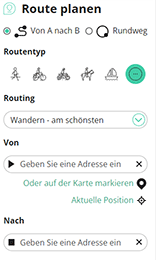
Mit RouteYou kannst du ganz einfach eigene Karten erstellen. Plane deine Route, füge Wegpunkte oder Knotenpunkte hinzu, plane Sehenswürdigkeiten und Einkehrmöglichkeiten ein und teile alles mit Familie und Freunden.
Routenplaner
<iframe src="https://plugin.routeyou.com/poiviewer/free/?language=de&params.poi.id=8248327&params.language=en" width="100%" height="600" frameborder="0" allowfullscreen></iframe>

Mehr als 11.800.000 Routen

Mehr als 15.000.000 Benutzer

Mehr als 4.500.000 Sehenswürdigkeiten

Kerkstraat 108
9050 Gentbrugge,Belgien
© 2006-2026 RouteYou - www.routeyou.com