Source: Pascal Brackman
The stones here belong to the Brabant Massif or the Brabant Massif. These are a mass of rock layers that were deposited 500 million years ago in the Cambrian period. At that time, Flanders was still at the South Pole. Just before the Cambrian, the coast of Gondwana was flooded by a sea that rose because an ice age had come to an end. In that sea, layers of sand and clay, an impressive 9 km thick, were deposited, which are breakdown products of the Gondwana supercontinent where we were located at the edge. AND those rocks can still be found here.
It has even been discovered that there were nearby volcanoes that had eroded, as remnants in the form of small grains have been found in the rocks.
Source: Jasper Verhaegen, De Geschiedenis van onze grond
 | | Public | Danish • Dutch • French • German • Italian • Spanish

Select one of the most popular activities below or refine your search.
Discover the most beautiful and popular trails in the area, carefully bundled into appropriate selections.
Source: Pascal Brackman
Select one of the most popular categories below or be inspired by our selections.
Discover the most beautiful and popular attractions in the area, carefully bundled in appropriate selections.
Source: Pascal Brackman
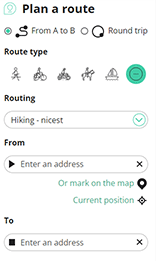
With RouteYou, it's easy to create your own customised maps. Simply plot your route, add waypoints or nodes, add places of interest and places to eat and drink, and then easily share it with your family and friends.
Route planner
<iframe src="https://plugin.routeyou.com/poiviewer/free/?language=en&params.poi.id=8988940" width="100%" height="600" frameborder="0" allowfullscreen></iframe>

More than 11,800,000 routes

More than 15,000,000 users

More than 4,500,000 points of interest

Kerkstraat 108
9050 Gentbrugge, Belgium
© 2006-2026 RouteYou - www.routeyou.com