The green area and the large building with two wings to your right are part of the Royal Belgian Institute of Natural Sciences. This is best known for its museum collection of dinosaurs, more specifically iguanodons. The long yellow wing (designed by Emmanuel Cels in 1857) was once intended to be part of a Redemptorist monastery which was never completed. The aristocratic Leopold Quarter was a popular choice for new monasteries. The wing to the left was built by architect Emile Janlet for the world-famous iguanodon skeletons that were discovered by miners in Bernissart in 1878. The collection of the species Iguanodon bernissartensis contains some 30 complete skeletons, dating from 115 to 140 million years ago. It is the museum’s main crowd-puller. The museum rooms display only a fraction of the estimated 38 million insects, stones, shells, fossils and bones in the storage rooms: after Paris and London, this is the largest natural history collection in Europe.

Select one of the most popular activities below or refine your search.
Discover the most beautiful and popular trails in the area, carefully bundled into appropriate selections.
Select one of the most popular categories below or be inspired by our selections.
Discover the most beautiful and popular attractions in the area, carefully bundled in appropriate selections.
With RouteYou, it's easy to create your own customised maps. Simply plot your route, add waypoints or nodes, add places of interest and places to eat and drink, and then easily share it with your family and friends.
Route planner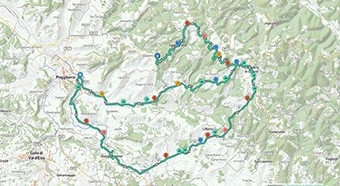
<iframe src="https://plugin.routeyou.com/poiviewer/free/?language=en&params.poi.id=8179558" width="100%" height="600" frameborder="0" allowfullscreen></iframe>

More than 11,800,000 routes

More than 15,000,000 users

More than 4,500,000 points of interest

Kerkstraat 108
9050 Gentbrugge, Belgium
© 2006-2026 RouteYou - www.routeyou.com


 | | Public |