Source: Willem Vandenameele


The Blanket of the cloth weavers (1680-1800) used to be the room for the blankets of the cloth weavers in the Belgian city of Leuven, located in the Naamsestraat.
Originally the blankets of the cloth weavers resided in the Cloth Hall in the Naamsestraat in Leuven. The 8 deans each had their desks and together they formed a court for cloth weavers (from the 14th century). Four blankets came from the patricians of Leuven, the other 4 blankets were artisans.
In 1679 the University of Leuven took over the Lakenhal for its study activities. The Cloth Hall was located in Heverleesestraat, which has been called Naamsestraat since the 19th century. The university had previously moved into a few classrooms; henceforth she owned the entire Cloth Hall. As compensation, the university bought 2 houses across the street, the Steenken and the Schilt van Loven. These houses stood next to the town hall of Leuven. The city council bought a third house for the cloth weavers, namely the house de Olifant in Muntstraat. The 2 houses in the Naamsestraat were torn down and made way for a new office building in 1680. The 3rd house, De Olifant, became the deanery's caretaker's office. The denij opens onto the Vrijthof of the town hall.
Architect Vincent Anthoni, official architect of the Spanish King Charles II in Brussels, drew the plans for both the redesign of the Cloth Hall and the construction of the deanery. In 1682, the city council of Leuven refused to pay the architect's invoice because it was excessively high. The Council of Brabant decided in its verdict that Vincent Anthoni still had to be paid.
The French administration in Leuven abolished the guilds at the end of the 18th century. In the 19th century, the city council of Leuven successively housed the academy for fine arts, the police and the city administration in the building. In 1938, the De Olifant house with its stair tower was demolished for the construction of a municipal office. Since then, the deanij has only had one wing, the one in Naamsestraat. Shortly afterwards, this wing became a listed building.
Today, the desk of the Tourist Office of Leuven can be found there.
Source: Willem Vandenameele
 | | Public | Danish • Dutch • French • German • Italian • Spanish

Select one of the most popular activities below or refine your search.
Discover the most beautiful and popular trails in the area, carefully bundled into appropriate selections.
Source: Willem Vandenameele
Select one of the most popular categories below or be inspired by our selections.
Discover the most beautiful and popular attractions in the area, carefully bundled in appropriate selections.
Source: Willem Vandenameele
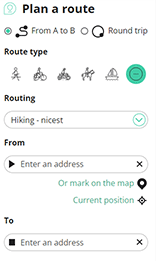
With RouteYou, it's easy to create your own customised maps. Simply plot your route, add waypoints or nodes, add places of interest and places to eat and drink, and then easily share it with your family and friends.
Route planner
<iframe src="https://plugin.routeyou.com/poiviewer/free/?language=en&params.poi.id=8289914" width="100%" height="600" frameborder="0" allowfullscreen></iframe>

More than 11,800,000 routes

More than 15,000,000 users

More than 4,500,000 points of interest

Kerkstraat 108
9050 Gentbrugge, Belgium
© 2006-2026 RouteYou - www.routeyou.com