Source: Willem Vandenameele
The Porta Nigra in Trier is one of the most impressive Roman structures north of the Alps and has been on the UNESCO World Heritage List since 1986. The structure is approximately 29 metres high , 36 metres wide and 21 metres deep .
Built around 170 AD , this imposing city gate served as the northern entrance to the then Augusta Treverorum , today's Trier.
The Porta Nigra is constructed from massive sandstone blocks (some weighing up to 6 tons!) , stacked without cement and connected with iron staples. In the Middle Ages, many of these staples were removed to reuse the metal, resulting in the traces of rust that are still visible today. The blocks were brought to the construction site by ox carts from a local quarry north of Trier.
Originally the building had a light colour, but over the centuries weathering and environmental influences turned it dark, leading to the name "Porta Nigra" or "Black Gate".
In the 11th century, the Porta Nigra was converted into the Church of St. Simeon , in honor of the hermit Simeon who lived in the ruins of the gate. After his death in 1035, he was canonized and buried in the gate. In 1804, Napoleon Bonaparte ordered the church to be dismantled and the structure to be restored to its original Roman form.
One of the most popular tours is "The Secret of the Porta Nigra" , where a guide in the role of a Roman centurion takes visitors on an interactive journey through the history of the monument. This tour is suitable for visitors aged 10 and over and is conducted in German.
Source: Willem Vandenameele - ChatGPT
 | | Public | Catalan • Danish • Dutch • French • German • Italian • Spanish

Select one of the most popular activities below or refine your search.
Discover the most beautiful and popular trails in the area, carefully bundled into appropriate selections.
Source: Willem Vandenameele
Select one of the most popular categories below or be inspired by our selections.
Discover the most beautiful and popular attractions in the area, carefully bundled in appropriate selections.
Source: Willem Vandenameele
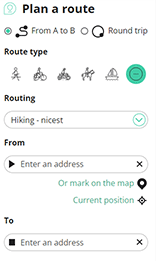
With RouteYou, it's easy to create your own customised maps. Simply plot your route, add waypoints or nodes, add places of interest and places to eat and drink, and then easily share it with your family and friends.
Route planner
<iframe src="https://plugin.routeyou.com/poiviewer/free/?language=en&params.poi.id=9103234" width="100%" height="600" frameborder="0" allowfullscreen></iframe>

More than 11,800,000 routes

More than 15,000,000 users

More than 4,500,000 points of interest

Kerkstraat 108
9050 Gentbrugge, Belgium
© 2006-2026 RouteYou - www.routeyou.com