Source: Willem Vandenameele
The octagonal Torre de la Plata was built in the 13th century by the Almohads and was part of the walls that surrounded the city of Seville.
It was the end of the perimeter wall and was connected by a wall to the Torre del Oro (Golden Tower). When King Ferdinand III came to power, the tower was given the name Torre de la Victoria, although it remained colloquially called Torre de la Plata (Silver Tower).
In the 16th century the defensive function of the wall was lost and it served as support for houses , shops and warehouses. This meant that the Torre de la Plata itself became less and less important in the city.
Until recently it was used as a residence and its silhouette was hidden between the adjacent buildings, between which only the battlements and little else could be seen. The tower was partially restored in 1992 and both the tower and the immediate surroundings are currently being renovated.
It is an octagonal tower with irregular sides where two rooms were known to have existed: one on the ground floor and above that a main floor with an exit to the upper roof, enclosed by a crenellated parapet. However, restoration work has uncovered a lower space that served as a water reservoir.
The lower floor is covered with an early Gothic rib vault, arranged in eight elements bearing the same number of ribs and starting from simple pilasters with equally simple imposts, all of which converge in a polygonal keystone.
Source: Willem Vandenameele
 | | Public | Catalan • Danish • Dutch • French • German • Italian • Spanish

Select one of the most popular activities below or refine your search.
Discover the most beautiful and popular trails in the area, carefully bundled into appropriate selections.
Source: Willem Vandenameele
Select one of the most popular categories below or be inspired by our selections.
Discover the most beautiful and popular attractions in the area, carefully bundled in appropriate selections.
Source: Willem Vandenameele
With RouteYou, it's easy to create your own customised maps. Simply plot your route, add waypoints or nodes, add places of interest and places to eat and drink, and then easily share it with your family and friends.
Route planner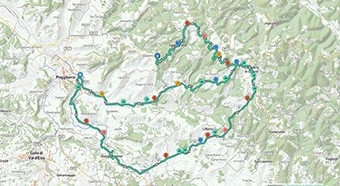
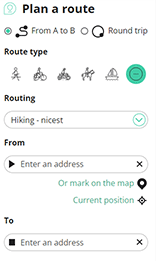
<iframe src="https://plugin.routeyou.com/poiviewer/free/?language=en&params.poi.id=8758776" width="100%" height="600" frameborder="0" allowfullscreen></iframe>

More than 11,800,000 routes

More than 15,000,000 users

More than 4,500,000 points of interest

Kerkstraat 108
9050 Gentbrugge, Belgium
© 2006-2026 RouteYou - www.routeyou.com