Source: Jean-François Feutriez
Copyright: All rights reserved
The Vingeanne is formed by the meeting of two streams:
- To the North, the source of Combe Royer, the only "canyon" in Haute-Marne carved by water in limestone terrain. It is considered the "official" geographical source.
- To the South, the other source is mentioned on the IGN map.
In May, a carpet of wild garlic will accompany you throughout your discovery. The path is, in fact, covered with white stars of garlic and its intoxicating scent...

Discovery circuit available on the free Id-Vizit app!
A true personal travel companion, Id-Vizit offers personalized, fun, and interactive visit routes!
+ info on Id-Vizit
For nature specialists:
The ZNIEFF of the Vingeanne springs, integrated into the large type II ZNIEFF of the Auberive forest massif and the Bois de Baissey, includes a set of former pastures established on marly land, largely reforested today.
Two sectors still present significant interest: the Rosière marsh, a typical tufa marsh of the Langres Plateau (schoenaie, cariçaie, moliniaie) and an area covered by alternately dry and wet grassland, constituting the last Haute-Marne example of this type of grouping.
The vegetation:
The vegetation features more than ten rare or protected species, such as the rusty hair-grass (national protection), the clandestine herminie, which has its only station here in Champagne-Ardenne, two other orchids (the vanilla-scented gymnadenia and the pink orchid), the creeping willow, the broad-leaved cotton grass, etc. One species is at its northern distribution limit here, the intermediate sedge, which is rare in Haute-Marne. All these species are part of the red list of plants in Champagne-Ardenne.
The fauna:
The entomofauna is rich and diverse and contains many rare or threatened species: for dragonflies, the Mercury damselfly, protected in France since 1993, listed on the international lists of the Habitat Directive and the Bern Convention, on the red list of French fauna as a threatened species in the northern half of France, the banded cordulegaster, of mountainous origin, rare throughout France but well represented on the Langres plateau and listed on the red list of insects in Champagne-Ardenne.
Six grasshoppers are listed on the red list of Orthoptera: singing grasshoppers (vagrant grasshopper, mountain grasshopper, and small-winged grasshopper), colorful grasshoppers (blue oedipoda), migratory grasshoppers (Italian grasshopper), and a grasshopper of damp grounds with lush vegetation (small-winged decticella).
Three butterflies are on the regional red list: the Sanguisorba pearly or Ino, which favors marshy meadows and light, moist woods, the hermit (very rare in plains), and the rusty skipper.
The praying mantis and a small cicada, the mountain cicada, are also present.
The asp viper and the salamander (regional red list) have also been recorded within the perimeter of the ZNIEFF.
The site has been protected since 1987 by a biotope protection order encompassing almost the entire ZNIEFF.
Address: 52250 Aprey, France
Statistics
Select one of the most popular activities below or refine your search.
Discover the most beautiful and popular trails in the area, carefully bundled into appropriate selections.
Source: Jean-François Feutriez
Copyright: All rights reserved
Select one of the most popular categories below or be inspired by our selections.
Discover the most beautiful and popular attractions in the area, carefully bundled in appropriate selections.
Source: Jean-François Feutriez
Copyright: All rights reserved
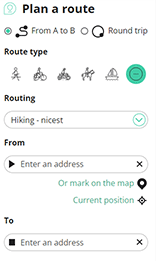
With RouteYou, it's easy to create your own customised maps. Simply plot your route, add waypoints or nodes, add places of interest and places to eat and drink, and then easily share it with your family and friends.
Route planner
<iframe src="https://plugin.routeyou.com/poiviewer/free/?language=en&params.poi.id=9280408" width="100%" height="600" frameborder="0" allowfullscreen></iframe>

More than 11,800,000 routes

More than 15,000,000 users

More than 4,500,000 points of interest

Kerkstraat 108
9050 Gentbrugge, Belgium
© 2006-2026 RouteYou - www.routeyou.com



 | | Public |