Linked to the standing stones of Callanish, there are plenty of legends. Local tradition says that giants who lived on the island refused to be converted to Christianity by Saint Kieran and were turned into stone as a punishment. Another local belief says that at sunrise on midsummer morning, the "shining one" walked along the stone avenue, "his arrival heralded by the cuckoo's call." This legend could be a folk memory recalling the astronomical significance of the stones.
Source: Wikipedia
 | | Public | Dutch

Select one of the most popular activities below or refine your search.
Discover the most beautiful and popular trails in the area, carefully bundled into appropriate selections.
Source: http://en.wikipedia.org/wik...
Select one of the most popular categories below or be inspired by our selections.
Discover the most beautiful and popular attractions in the area, carefully bundled in appropriate selections.
Source: http://en.wikipedia.org/wik...
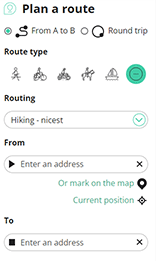
With RouteYou, it's easy to create your own customised maps. Simply plot your route, add waypoints or nodes, add places of interest and places to eat and drink, and then easily share it with your family and friends.
Route planner
<iframe src="https://plugin.routeyou.com/poiviewer/free/?language=en&params.poi.id=713398" width="100%" height="600" frameborder="0" allowfullscreen></iframe>

More than 11,800,000 routes

More than 15,000,000 users

More than 4,500,000 points of interest

Kerkstraat 108
9050 Gentbrugge, Belgium
© 2006-2026 RouteYou - www.routeyou.com