Source: Pascal Brackman
The sedimentary deposits date from the Paleogene to Neogene transition period, more precisely from the Late Oligocene to Early Miocene transition (~28.1–23.03 million years ago Early Miocene (Aquitanian): ~23.03–20.44 million years ago).
The area was then under a shallow sea/delta where rivers deposited sand, gravel, boulders and clay. There was a lot of this material available because the Pindos mountains were just created NW of this place. The Pindos Mountain Range began forming during tectonic processes approximately 30 million years ago, resulting from the collision between the Eurasian and African plates.
Eroding this freshly created mountain range in the north and west of this spot, these sediments formed thick layers of conglomerate (large round boulders in a sand matrix) and sandstone. The round boulders in the conglomerate were formed by transport in rivers before they were buried. You can still see the transport of this type of pebbles in the Pinios today. A massive amount of these pebbles were deposited in the past here at this spot when it was an estuary near a huge lake.
It is part of the Pentalophos Formation that makes up the Meteora rocks.
The Antarctic ice sheet, which formed in the Late Eocene/Oligocene, stabilized further, contributing to a global cooling effect. Sea level dropped due to the continued cooling, gradually changing continental connections (such as between Africa and Eurasia).
But there was also some significant tectonic activity here: The African plate was subducting beneath the Aegean microplate, causing the subduction trench to retreat .
 | | Public | Danish • Dutch • French • German • Italian • Spanish

Select one of the most popular activities below or refine your search.
Discover the most beautiful and popular trails in the area, carefully bundled into appropriate selections.
Source: Pascal Brackman
Select one of the most popular categories below or be inspired by our selections.
Discover the most beautiful and popular attractions in the area, carefully bundled in appropriate selections.
Source: Pascal Brackman
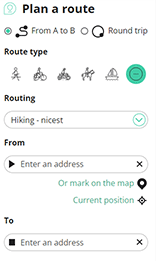
With RouteYou, it's easy to create your own customised maps. Simply plot your route, add waypoints or nodes, add places of interest and places to eat and drink, and then easily share it with your family and friends.
Route planner
<iframe src="https://plugin.routeyou.com/poiviewer/free/?language=en&params.poi.id=973402" width="100%" height="600" frameborder="0" allowfullscreen></iframe>

More than 11,800,000 routes

More than 15,000,000 users

More than 4,500,000 points of interest

Kerkstraat 108
9050 Gentbrugge, Belgium
© 2006-2026 RouteYou - www.routeyou.com