Source: De Wandelmaker
This route takes us a little further back to the present on the geological timescale. The beginning of the route runs over sandy soils that were deposited during the last ice age, from 116,000 to about 11,000 years ago. The route ends along peat soils and polders and discusses the effect of humans on this peat landscape, from the Middle Ages to about 200 years ago.
Large oaks line the road, trees that have traditionally been found on the nutrient-poor sandy soils. This corresponds to the fact that the road ends in De Bilt, a name derived from ‘te belt’. The current word mound is derived from the word ‘belt’, and the place name literally means ‘on a mound’. This mound was an outlier of the Utrecht Ridge.
 | | Public | Danish • Dutch • French • German • Italian • Spanish
Address: Groenekan
Statistics
Select one of the most popular activities below or refine your search.
Discover the most beautiful and popular trails in the area, carefully bundled into appropriate selections.
Source: De Wandelmaker
Select one of the most popular categories below or be inspired by our selections.
Discover the most beautiful and popular attractions in the area, carefully bundled in appropriate selections.
Source: De Wandelmaker
With RouteYou, it's easy to create your own customised maps. Simply plot your route, add waypoints or nodes, add places of interest and places to eat and drink, and then easily share it with your family and friends.
Route planner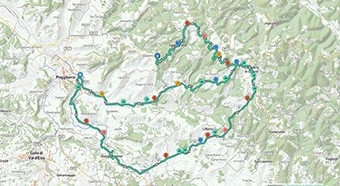
<iframe src="https://plugin.routeyou.com/poiviewer/free/?language=en&params.poi.id=2305035" width="100%" height="600" frameborder="0" allowfullscreen></iframe>

More than 11,800,000 routes

More than 15,000,000 users

More than 4,500,000 points of interest

Kerkstraat 108
9050 Gentbrugge, Belgium
© 2006-2026 RouteYou - www.routeyou.com