The structure of long, continuous parcels ('slagen') separated by ditches is characteristic of this area. To reclaim the land, drainage ditches were dug perpendicular to the Vecht in the Middle Ages. At the end of a reclaimed area, a cross levee, a dike, was constructed to keep the land dry. Along this levee, buildings emerged. If the land became marshy again due to shrinkage, people began to reclaim the area behind the levee. Here too, a back levee emerged as a boundary, where building took place. In this way, the villages gradually 'walked' further into the land. The road you are currently cycling on formed, from the end of the 15th century, the back levee of the reclaiming areas on your left. From this levee, heading towards the sandy soils of the Gooi, there are extremely long, continuous parcels without cross levees. This is often referred to as 'extending parceling'. Because the pace of reclamation varied, not all back levees were constructed simultaneously. The road also makes a sharp, right-angle turn where a 'slow' and a faster reclamation area meet.
Source: Zicht op de Vechtstreek
 | | Public | Danish • Dutch • French • German • Italian • Spanish
Address: Achterwetering, Utrecht, Netherlands
Statistics
Select one of the most popular activities below or refine your search.
Discover the most beautiful and popular trails in the area, carefully bundled into appropriate selections.
Select one of the most popular categories below or be inspired by our selections.
Discover the most beautiful and popular attractions in the area, carefully bundled in appropriate selections.
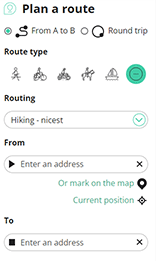
With RouteYou, it's easy to create your own customised maps. Simply plot your route, add waypoints or nodes, add places of interest and places to eat and drink, and then easily share it with your family and friends.
Route planner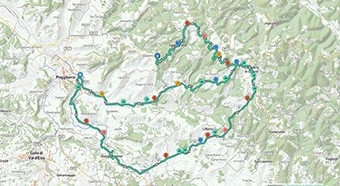
<iframe src="https://plugin.routeyou.com/poiviewer/free/?language=en&params.poi.id=1428333" width="100%" height="600" frameborder="0" allowfullscreen></iframe>

More than 11,800,000 routes

More than 15,000,000 users

More than 4,500,000 points of interest

Kerkstraat 108
9050 Gentbrugge, Belgium
© 2006-2026 RouteYou - www.routeyou.com