The shape of the Lofotoen is very peculiar. And that has everything to do with the geology. Lofoten is a horst ridge of bedrock. The rocks of Lofoten belong to the wider Western Gneiss Region of Norway. Some of the high relief and irregular surfaces of Lofoten has been attributed to etching that took place during the Mesozoic Era. Evidence of this would be the kaolinite found at some locations. To the northwest the Lofoten archipelago is bounded by the NE–SW-trending West Lofoten Border Fault. This is a normal fault whose fault scarp has been eroded forming a strandflat. In Vestvågøya mountains have steep slopes towards the open sea in the northwest and southeast while slopes pointing towards the interior of the island are more gentle. This is the result of erosion acting on a landscape that has been uplifted along NE–SW-trending faults in the margins of Lofoten while the interior axis has remained more stable. In tectonic terms mountains are half-grabens and faults are of the dip-slip type. The sea around Lofoten is known to host significant oil reserves: 1.3 bn barrels. Oil extraction in the Lofoten area is prohibited.

Select one of the most popular activities below or refine your search.
Discover the most beautiful and popular trails in the area, carefully bundled into appropriate selections.
Source: Bjoertvedt
Select one of the most popular categories below or be inspired by our selections.
Discover the most beautiful and popular attractions in the area, carefully bundled in appropriate selections.
Source: Bjoertvedt
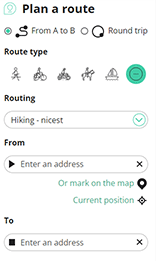
With RouteYou, it's easy to create your own customised maps. Simply plot your route, add waypoints or nodes, add places of interest and places to eat and drink, and then easily share it with your family and friends.
Route planner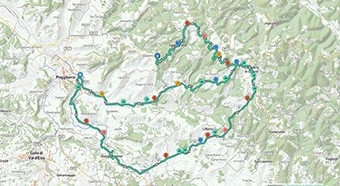
<iframe src="https://plugin.routeyou.com/poiviewer/free/?language=en&params.poi.id=8237890" width="100%" height="600" frameborder="0" allowfullscreen></iframe>

More than 10,100,000 routes

More than 15,000,000 users

More than 4,500,000 points of interest

Kerkstraat 108
9050 Gentbrugge, Belgium
© 2006-2025 RouteYou - www.routeyou.com


 | | Public |