La "fau" in antico francese indica l'albero che secondo le regioni è chiamato "fayard", "faye" o "foy" o "faggio", due termini che hanno un'origine comune indoeuropea. O, per continuità celtica, con l'irlandese "feá", rendendolo così un buon candidato. Perché si deve sapere che nella lingua francese, e più specificamente in alcune lingue locali, ci sono rinascite galliche tramite l'intervento di alcuni mestieri, ma anche attraverso la toponomastica o il nome di alcune piante locali. Per quanto riguarda la Vergne, un termine di origine gallica. I dettagli di questa complessa etimologia appaiono nell'articolo dedicato al faggio comune.
La fau non supera i quattro o cinque metri. In estate espande le sue foglie in una chioma molto densa, che può arrivare a formare una sorta di igloo di foglie. In inverno viene rivelata l'architettura tormentata: tronchi e rami contorti, piegati, avvitati, rami terminali che cadono a terra.
Copyright: Creative Commons 3.0
 | | Public | Danish • Dutch • English • French • German • Spanish

Select one of the most popular activities below or refine your search.
Discover the most beautiful and popular trails in the area, carefully bundled into appropriate selections.
Select one of the most popular categories below or be inspired by our selections.
Discover the most beautiful and popular attractions in the area, carefully bundled in appropriate selections.
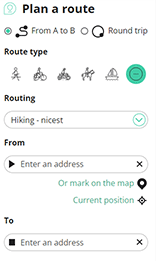
With RouteYou, it's easy to create your own customised maps. Simply plot your route, add waypoints or nodes, add places of interest and places to eat and drink, and then easily share it with your family and friends.
Route planner
<iframe src="https://plugin.routeyou.com/poiviewer/free/?language=en&params.poi.id=5905222&params.language=it" width="100%" height="600" frameborder="0" allowfullscreen></iframe>

More than 11,800,000 routes

More than 15,000,000 users

More than 4,500,000 points of interest

Kerkstraat 108
9050 Gentbrugge, Belgium
© 2006-2026 RouteYou - www.routeyou.com