Did you know that the language border is a unique phenomenon in the world? It was established in 1962, hoping that this would be the end of a long-lasting language struggle. Although a language border has a dynamic character, this language border was set in stone. The history of that language border is sometimes trampled upon. Francophone radicals see the border as a tool to enforce Flemish dominance. However, the demand for a language law with a language border came from Wallonia and dates back to a fear in the 20th century. There was a fear that regions like Charleroi and La Louvière, with their thousands of Flemish economic migrants, would become a Dutch-speaking language island. That fear was not unfounded, as Greater Charleroi then had more than 30,000 Flemings, which was more than the population of the old core city. The first language demand was discussed at the socialist language congress of 1929. The first serious language laws were introduced in 1932 to curb the threatening bilingualism in some Walloon regions.
Font: Pascal Verbeken, 2014, Grand Central Belge
 | | Pública | Alemany • Danès • Espanyol • Francès • Italià • Neerlandès

Seleccioneu una de les activitats més populars a continuació o perfeccioneu la cerca.
Descobriu les rutes més boniques i conegudes de la zona, acuradament agrupades en seleccions adequades.
Seleccioneu una de les categories més populars a continuació o inspira't en les nostres seleccions.
Descobriu els llocs d'interès més bonics i coneguts de la zona, acuradament agrupats en seleccions adequades.
Amb RouteYou pots crear mapes personalitzats molt fàcilment. Defineix la teva ruta, afegeix waypoints o interseccions, planifica parades a punts d'interès o a establiments per menjar i beure i comparteix-ho tot amb els amics i la família.
Planificador de rutes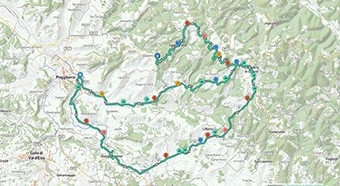
<iframe src="https://plugin.routeyou.com/poiviewer/free/?language=ca&params.poi.id=7228654&params.language=en" width="100%" height="600" frameborder="0" allowfullscreen></iframe>

Més de 11.800.000 rutes

Més de 15.000.000 usuaris

Més de 4.500.000 llocs d'interès

Kerkstraat 108
9050 Gentbrugge, Bèlgica
© 2006-2026 RouteYou - www.routeyou.com