Datenquelle: Willem Vandenameele
In 1977, archaeological excavations on site revealed the ruins of a public bath next to the "Forum" of the ancient Roman city of "Bracara Augusta".
The excavated part of the bath covers about 850 square meters . However, these baths were larger, as evidenced by the presence of the hypocaust and the pool to the south, separated from the rest of the building by a narrow corridor. According to the remains found, they were built at the end of the 1st century (Flavian period), the remains from this phase testifying to the four hot rooms whose hypocausts are relatively well preserved. It has not yet been possible to define the internal circuit or the function of some of the compartments connected to it. At the end of the 4th century and the beginning of the following century, the building underwent a major renovation and the surface area was greatly reduced.
In ancient Rome, public baths were huge buildings prepared to offer the city's inhabitants or visitors the opportunity to bathe in accordance with the rules prescribed by the medicine of the time.
According to this, the bather should begin by anointing his body with oil and practicing some gymnastic, sports or wrestling exercises . Then he would enter a very heated room, the sweating room, where he would sweat profusely. Next, he would go to the caldarium, a still heated room, where he could wash himself and remove the remaining oil . After a short stay in the tepidarium, he would dive into the frigidarium pool , whose icy water refreshed his body, after which he would be massaged and anointed with aromatic oils.
Datenquelle: Willem Vandenameele - Wikipedia
 | | Öffentlich | Deutsch • Französisch • Italienisch • Katalanisch • Niederländisch • Spanisch

Wählen Sie eine der beliebtesten Aktivitäten unten aus oder verfeinern Sie Ihre Suche.
Entdecken Sie die schönsten und beliebtesten Routen in der Gegend, sorgfältig gebündelt in einer passenden Auswahl.
Datenquelle: Willem Vandenameele
Wählen Sie eine der unten aufgeführten beliebtesten Kategorien oder lassen Sie sich von unserer Auswahl inspirieren.
Entdecken Sie die schönsten und beliebtesten Sehenswürdigkeiten der Gegend, sorgfältig gebündelt in einer entsprechenden Auswahl.
Datenquelle: Willem Vandenameele
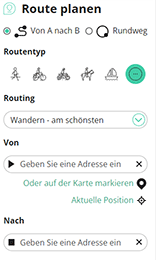
Mit RouteYou kannst du ganz einfach eigene Karten erstellen. Plane deine Route, füge Wegpunkte oder Knotenpunkte hinzu, plane Sehenswürdigkeiten und Einkehrmöglichkeiten ein und teile alles mit Familie und Freunden.
Routenplaner
<iframe src="https://plugin.routeyou.com/poiviewer/free/?language=de&params.poi.id=9019882&params.language=en" width="100%" height="600" frameborder="0" allowfullscreen></iframe>

Mehr als 10.100.000 Routen

Mehr als 15.000.000 Benutzer

Mehr als 4.500.000 Sehenswürdigkeiten

Kerkstraat 108
9050 Gentbrugge,Belgien
Kontaktieren Sie unser Kundendienstteam oder besuchen Sie unser Hilfezentrum.
© 2006-2026 RouteYou - www.routeyou.com