The beautiful pulpit of the basilica of Grimbergen.
The pulpit of the basilica of Grimbergen is an impressive baroque work, richly adorned with wood carvings and deeply symbolic elements.
The pulpit is the work of the renowned sculptor Hendrik-Frans Verbruggen, an important figure in baroque sculpture in the Southern Netherlands. The bowl of the pulpit is supported by statues of the saints Norbertus and Augustine. The bowl is further decorated with images of the four evangelists, represented by their traditional symbols: an angel (Matthew), a lion (Mark), an ox (Luke), and an eagle (John).
Between Norbertus and Augustine is depicted the heretic Tanchelm, which is unique as a warning against heresy.
At the top of the pulpit stands a statue of Saint Servatius, the patron saint of the church.
At the corners are cherubs showing attributes of the four cardinal virtues: prudentia (prudence, with mirror), iustitia (justice, with scales), temperantia (temperance, with reins) and fortitudo (fortitude, with column).
On the stair railing, angels are depicted with the Old and New Testament. In particular, it is known that on the open book where Augustine is writing, the text "Contra Pelagianos" is inscribed. This refers to Augustine's famous work against the views of the British heretic Pelagius, who denied the existence of original sin.
Pelagius was a British (mostly Scottish) monk, active in the early fifth century, who is primarily known as an opponent of the doctrine of original sin. Pelagius argued that humans are born with free will and that Adam's original sin had no lasting effect on human nature: everyone begins, in his view, as a 'blank slate' and is thus free to choose good or evil. He distanced himself from the idea that humans are inherently sinful or lost, as Augustine taught; Augustine saw humanity as fundamentally broken due to sin and dependent on grace. Original sin, as defended by the church at various councils, means that the fall of Adam and Eve has affected all people and that every human is consequently born with a sinful nature. Pelagius fundamentally denied this, leading to the condemnation of his doctrine as heresy at, for example, the Council of Carthage (418) and Orange (529). Norbertus, the founder of the Norbertines, like Augustine and most Church Fathers, was an advocate of the doctrine of original sin. Norbertus defended the necessity of divine grace and the sacrament of baptism as purification from original sin, thus directly opposing the Pelagianism that emphasized human autonomy and goodness. The struggle against the ideas of Pelagius was therefore also a struggle for the Catholic tradition which stated: humans are dependent on God's grace to be freed from original sin – exactly what is depicted on the pulpit of the basilica of Grimbergen.
 | | Öffentlich | Deutsch • Dänisch • Französisch • Italienisch • Niederländisch • Spanisch

Wählen Sie eine der beliebtesten Aktivitäten unten aus oder verfeinern Sie Ihre Suche.
Entdecken Sie die schönsten und beliebtesten Routen in der Gegend, sorgfältig gebündelt in einer passenden Auswahl.
Wählen Sie eine der unten aufgeführten beliebtesten Kategorien oder lassen Sie sich von unserer Auswahl inspirieren.
Entdecken Sie die schönsten und beliebtesten Sehenswürdigkeiten der Gegend, sorgfältig gebündelt in einer entsprechenden Auswahl.
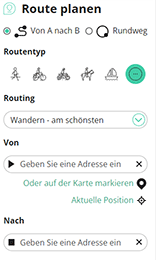
Mit RouteYou kannst du ganz einfach eigene Karten erstellen. Plane deine Route, füge Wegpunkte oder Knotenpunkte hinzu, plane Sehenswürdigkeiten und Einkehrmöglichkeiten ein und teile alles mit Familie und Freunden.
Routenplaner
<iframe src="https://plugin.routeyou.com/poiviewer/free/?language=de&params.poi.id=9334846&params.language=en" width="100%" height="600" frameborder="0" allowfullscreen></iframe>

Mehr als 10.100.000 Routen

Mehr als 15.000.000 Benutzer

Mehr als 4.500.000 Sehenswürdigkeiten

Kerkstraat 108
9050 Gentbrugge,Belgien
Kontaktieren Sie unser Kundendienstteam oder besuchen Sie unser Hilfezentrum.
© 2006-2026 RouteYou - www.routeyou.com