Datenquelle: Vlaamse Gemeenschap, 24-11-1980, ©Vlaamse Gemeenschap
Urheberrechte: All rights reserved


Castle "de Oude Kluis", also known as Castle Minnaert, and to the last and current residents Castle Cardon de Lichtbuer. Named after a medieval hermitage (dating back at least to the 12th century) that may have been located at the site of the current castle or in the nearby area on the same side of the street (it is said that ruins of old foundations were uncovered at various points along this street side, among others at the pond in the garden of the property "de Oude Kluis," resembling a cloister corridor, at the current cemetery where the old rectory was demolished). Near the hermitage stood a chapel, the altar rights of which were transferred in 1165 to the Saint Bavo Abbey. Most likely, this was a castle chapel dependent on a lordly estate that possibly laid the foundation for the establishment of the municipality of Gentbrugge. In this case, the origin of castle "de Oude Kluis" would also date back to at least the 12th century. According to historical sources, the hermitage was inhabited in 1377 by Catharina de Carrembroeck. In the same year or shortly thereafter (1381), the hermitage and chapel were destroyed by a fire. After reconstruction, the chapel and hermitage would have formed a single building. The abandoned hermitage served as a rectory from 1501 to 1843. The church was most likely rebuilt in the early 17th century at the beginning of Kerkstraat (demolished in 1873). The plan of Horenbault (1619) depicts the church in the aforementioned street. The hermitage is said to have disappeared in 1845. This is confirmed by land registry data from 1846, according to which the rectory was erected in the same place. During the demolition of the rectory in 1918, it was in fact built on old foundations. Castle "de Oude Kluis" first appears on the map of Deventer (around 1560), also on the map of Horenbault (1619). Depicted on the map of Hondius (1641) as the house of Guillaume Minnaert, bailiff of the county of Ghent and councilor in the Council of Flanders. He is reported to have carried out significant renovation works on the castle. Later also served as a summer residence for Bishop Antoon Triest. In the course of the second half of the 19th century, it came into the possession of knight I. Lefèvre de ten Hove. Since around 1904, it has been inhabited by the family Cardon de Lichtbuer. The current castle includes, as shown in the image from Hondius (1641), a heavy tower structure with an L-shaped living area to its left. Initially, it bordered the front moat of the rectangular walled estate. An arch bridge led to the access gate in the wing to the left of the tower building. This wing featured two round corner turrets on the side facade (West). According to land registry data from 1905, the wing next to the tower building was first modified by the new owner J.E. Cardon de Lichtbuer, reportedly according to a design by the Bruges architect J. Viérin. A new entrance gate was erected to the right of the tower building, while the two round corner turrets were still retained, as well as the already existing recess of the wing in relation to the tower building (see old postcards). At the same time (1905), the small garden pavilion (dating from 1878) was replaced by a coach house, which reportedly also housed the school for the castle children. According to land registry data from 1949, this coach house was later enlarged into a villa (number 9). Enlargement works reportedly took place in 1912 on the west side of the castle. In this case, the newly built right corner projection of the rear facade was provided with two round turrets as a reminiscence of the two demolished corner turrets of the side facade. The garage to the right of the access gate and the gardener's house (current number 11) near the rebuilt coach house were reportedly built simultaneously with the enlargement works on the castle in 1912. Tower building, anchored brick building of two stories and two bays Under steep gabled roof (ridge perpendicular to the street, slate) presumably dating from the first half of the 17th century. Vaulted cellar possibly remains of an older construction (14th century?). High asymmetrical stepped gable (9 bays left, 7 bays right + crowning piece) with almost completely vanished plastering. One sandstone cross frame and rectangular window per floor, with glazing bars and shutters. Barred round-arch window and framed round lunette in the gable top. Whitewashed rear gable (modification of earlier stepped gable) with traces of wall waving. Furthermore, hidden behind a structure (1905) of two bays and two stories under left hipped gable roof (slate). Leaning living house consisting of a wing projecting at the back (in relation to the tower building) of two stories under slate hipped roofs (ridge parallel to the street and two perpendicular to the street above the sequentially added projections on the garden side) provided with dormer windows and a bell. Largely ivy-covered plastered and white-painted facade walls with a uniform appearance from the first quarter of the 20th century. Rectangular lower windows and round-arch upper windows. Front facade of six bays. Staggered rear facade. Right projecting corner projection between two round turret towers of three divisions with narrow rectangular windows and slate spire with iron crowning with flag (1912). Brick entrance gate in traditional style: crenellated gate facade with broad basket-arch passage behind arch bridge (1905). Front moat filled in 1970. Northern section of the moat preserved in the garden pond.
Datenquelle: Verbeeck, Mieke (1983)
Urheberrechte: All rights reserved
 | | Öffentlich | Deutsch • Dänisch • Französisch • Italienisch • Niederländisch • Spanisch
Adresse: Gentbruggekouter 7, Gent, Belgien
Statistiken
Wählen Sie eine der beliebtesten Aktivitäten unten aus oder verfeinern Sie Ihre Suche.
Entdecken Sie die schönsten und beliebtesten Routen in der Gegend, sorgfältig gebündelt in einer passenden Auswahl.
Datenquelle: Vlaamse Gemeenschap, 24-11-1980, ©Vlaamse Gemeenschap
Urheberrechte: All rights reserved
Wählen Sie eine der unten aufgeführten beliebtesten Kategorien oder lassen Sie sich von unserer Auswahl inspirieren.
Entdecken Sie die schönsten und beliebtesten Sehenswürdigkeiten der Gegend, sorgfältig gebündelt in einer entsprechenden Auswahl.
Datenquelle: Vlaamse Gemeenschap, 24-11-1980, ©Vlaamse Gemeenschap
Urheberrechte: All rights reserved
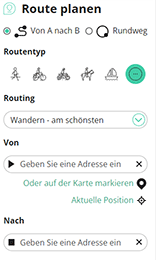
Mit RouteYou kannst du ganz einfach eigene Karten erstellen. Plane deine Route, füge Wegpunkte oder Knotenpunkte hinzu, plane Sehenswürdigkeiten und Einkehrmöglichkeiten ein und teile alles mit Familie und Freunden.
Routenplaner
<iframe src="https://plugin.routeyou.com/poiviewer/free/?language=de&params.poi.id=3173746&params.language=en" width="100%" height="600" frameborder="0" allowfullscreen></iframe>

Mehr als 11.800.000 Routen

Mehr als 15.000.000 Benutzer

Mehr als 4.500.000 Sehenswürdigkeiten

Kerkstraat 108
9050 Gentbrugge,Belgien
Kontaktieren Sie unser Kundendienstteam oder besuchen Sie unser Hilfezentrum.
© 2006-2026 RouteYou - www.routeyou.com