The oak trees that lie here were found during gravel excavation. Perhaps these trees grew upstream about 2000 years ago. They were part of a primeval forest along the banks of the Maas. The higher parts of the banks flooded less often, allowing the forests to develop into hardwood floodplain forests with imposing oak trees. Due to the power of the water, the river repeatedly changed its course, engulfing parts of the forest. The trees were swept away in the current and washed up on the banks, where they were buried under gravel, sand, and loam. Thus, they were preserved all those years.
Risorsa: Limburgs Landschap vzw
 | | Pubblica | Danese • Francese • Italiano • Olandese • Spagnolo • Tedesco

Seleziona una delle attività più popolari qui sotto oppure affina la ricerca.
Scopri gli itinerari più belli e popolari della zona, accuratamente raggruppati in apposite selezioni.
Seleziona una delle categorie più popolari qui sotto o lasciati ispirare dalla nostra selezione.
Scopri i luoghi di interesse più belli e popolari della zona, accuratamente raggruppati in apposite selezioni.
Con RouteYou puoi creare facilmente mappe personalizzate. Traccia il tuo itinerario, aggiungi waypoint o nodi, luoghi di interesse e di ristoro, e condividi le mappe con la tua famiglia e i tuoi amici.
Pianificatore di itinerari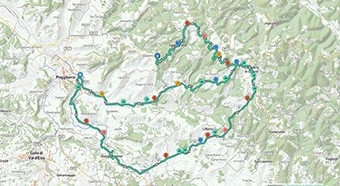
<iframe src="https://plugin.routeyou.com/poiviewer/free/?language=it&params.poi.id=2584742&params.language=en" width="100%" height="600" frameborder="0" allowfullscreen></iframe>

Più di 11.800.000 itinerari

Più di 15.000.000 utenti

Più di 4.500.000 luoghi d'interesse

Kerkstraat 108
9050 Gentbrugge, Belgio
© 2006-2026 RouteYou - www.routeyou.com