Datenquelle: Willem Vandenameele
With its dizzying 100-metre-high dome, the Notre-Dame Basilica dominates the entire city. Built in the 19th century by an amateur priest-architect on the ruins of the medieval cathedral, it is the last monumental expression of a cult that dates back to the 7th century.
The cult of Notre-Dame de Boulogne is based on the tradition of a miraculous statue of the Virgin that was washed up on the shore in 633 or 636 in a boat propelled by angels . A modest sanctuary seems to have been built there very early, replaced around 1100 by a stone church attributed to the Countess of Boulogne, Ide de Lorraine. Devotion to the Virgin Nautonière made the town the centre of an important pilgrimage in the Middle Ages. In the 16th century , the church became a cathedral following the disintegration of the bishopric of Thérouanne after the sack of that town by Charles V.
The consequences of the Revolution were fatal; closed to worship and robbed of its statue, burned in 1793, the church was sold as national property and demolished in 1798. The episcopal see was abolished in 1801 and definitively established in Arras.
In 1827, Abbé Haffreingue, a priest from Boulogne, began the reconstruction of a sanctuary for Notre-Dame de Boulogne. The initial project included only the central part, from which emerged the chapel of the Virgin, consecrated in 1840, but thanks to the popularity of the project, a complete church was built in 1856; the papal blessing and a successful national lottery, supported by Victor Hugo and Alfred de Vigny, contributed greatly to the success of the project.
With its dome next to the Latin cruciform church, the neoclassical building has a special appearance, the result of the circumstances surrounding its construction and a reference to Saint-Louis des Invalides, a source of inspiration along with Saint Paul's in London and Saint Peter's in Rome. Notre-Dame became a basilica in 1879.
The 12th-century crypt, rediscovered during the construction of the basilica , is incorporated into the contemporary crypt built under the entire church, making it one of the largest in France . This vast maze of rooms, recently restored, is remarkable for the murals that cover the entire walls and for the collections it houses, made up of the remains of the old church and a treasure trove of sacred art, of which the reliquary of the Holy Blood, donated to Notre-Dame by Philippe Le Bel in 1308, is the jewel in the crown.
Datenquelle: Willem Vandenameele
 | | Öffentlich | Deutsch • Dänisch • Französisch • Italienisch • Katalanisch • Niederländisch • Spanisch

Wählen Sie eine der beliebtesten Aktivitäten unten aus oder verfeinern Sie Ihre Suche.
Entdecken Sie die schönsten und beliebtesten Routen in der Gegend, sorgfältig gebündelt in einer passenden Auswahl.
Datenquelle: Willem Vandenameele
Wählen Sie eine der unten aufgeführten beliebtesten Kategorien oder lassen Sie sich von unserer Auswahl inspirieren.
Entdecken Sie die schönsten und beliebtesten Sehenswürdigkeiten der Gegend, sorgfältig gebündelt in einer entsprechenden Auswahl.
Datenquelle: Willem Vandenameele
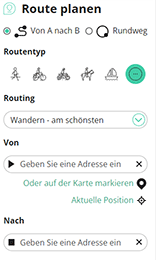
Mit RouteYou kannst du ganz einfach eigene Karten erstellen. Plane deine Route, füge Wegpunkte oder Knotenpunkte hinzu, plane Sehenswürdigkeiten und Einkehrmöglichkeiten ein und teile alles mit Familie und Freunden.
Routenplaner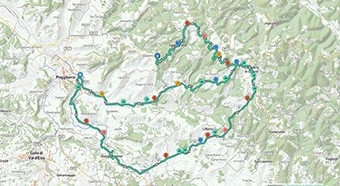
<iframe src="https://plugin.routeyou.com/poiviewer/free/?language=de&params.poi.id=8990111&params.language=en" width="100%" height="600" frameborder="0" allowfullscreen></iframe>

Mehr als 11.800.000 Routen

Mehr als 15.000.000 Benutzer

Mehr als 4.500.000 Sehenswürdigkeiten

Kerkstraat 108
9050 Gentbrugge,Belgien
© 2006-2026 RouteYou - www.routeyou.com