Poldering began as early as the 11th century in the Netherlands. This initiative came from the Flemish Abbeys that began building dikes in Zeeland and draining land. Slowly, the islands grew larger through poldering. The Oudland of Zeeland is an example of a polder area. After a storm surge in 1134, the old land was completely surrounded by dikes, incorporating older dikes and dams into the ring dike. This complicated the drainage of the pools enclosed by ridges. This problem was partially solved by means of waterways, locks, and drainage systems. Much of the past can still be found in the contemporary landscape. The "hilly relief" is a reminder of the peat extraction in these areas. The enclosed area of the creek ridges and transitional soils is still used as arable land. In the Oudland, higher creek ridges alternate with lower pool areas.
Copyright: All rights reserved
 | | Public | Danish • Dutch • French • German • Italian • Spanish

Select one of the most popular activities below or refine your search.
Discover the most beautiful and popular trails in the area, carefully bundled into appropriate selections.
Select one of the most popular categories below or be inspired by our selections.
Discover the most beautiful and popular attractions in the area, carefully bundled in appropriate selections.
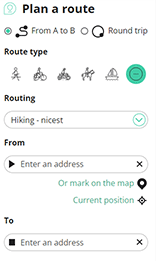
With RouteYou, it's easy to create your own customised maps. Simply plot your route, add waypoints or nodes, add places of interest and places to eat and drink, and then easily share it with your family and friends.
Route planner
<iframe src="https://plugin.routeyou.com/poiviewer/free/?language=en&params.poi.id=411805" width="100%" height="600" frameborder="0" allowfullscreen></iframe>

More than 11,800,000 routes

More than 15,000,000 users

More than 4,500,000 points of interest

Kerkstraat 108
9050 Gentbrugge, Belgium
© 2006-2026 RouteYou - www.routeyou.com