Bron: KU Leuven Plantengids


Le cornouiller rouge (Cornus sanguinea) est facilement reconnaissable à ses tiges rouges. L'arbuste fleurit au printemps avec des fleurs blanches, en septembre, de petites baies rouge foncé apparaissent. Les baies du cornouiller rouge sont appréciées des oiseaux mais ne sont pas comestibles pour l'homme.
Il existe aussi un cornouiller jaune. Ces baies sont comestibles, et vous pouvez en faire un délicieux sirop et de la confiture. Faites donc attention à ne pas confondre les deux cornouillers : le cornouiller rouge doit son nom à ses branches rouges, tandis que le cornouiller jaune (avec ses fruits rouges) tire son nom de ses fleurs jaunes.
Bron: Agentschap voor Natuur en Bos
 | | Publiek | Deens • Duits • Engels • Italiaans • Nederlands • Spaans

Selecteer hieronder één van de populairste activiteiten of verfijn je zoekopdracht.
Ontdek de mooiste en meest populaire routes in de buurt, zorgvuldig gebundeld in passende selecties.
Bron: KU Leuven Plantengids
Selecteer hieronder één van de populairste categorieën of laat je inspireren door onze selecties.
Ontdek de mooiste en meest populaire bezienswaardigheden in de buurt, zorgvuldig gebundeld in passende selecties.
Bron: KU Leuven Plantengids
Met RouteYou kan je eenvoudig zelf aangepaste kaarten maken. Stippel je route uit, voeg waypoints of knooppunten toe, plan bezienswaardigheden en eet- en drinkgelegenheden in en deel alles met je familie en vrienden.
Routeplanner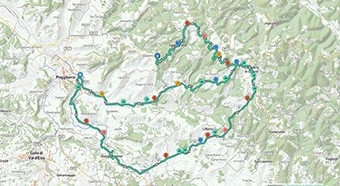
<iframe src="https://plugin.routeyou.com/poiviewer/free/?language=nl&params.poi.id=1814641&params.language=fr" width="100%" height="600" frameborder="0" allowfullscreen></iframe>

Meer dan 11.800.000 routes

Meer dan 15.000.000 gebruikers

Meer dan 4.500.000 trekpleisters

Kerkstraat 108
9050 Gentbrugge, België
© 2006-2026 RouteYou - www.routeyou.com