In der Peel (abgeleitet vom lateinischen palus = Sumpf) liegen undurchdringliche Lehmschichten recht nahe an der Oberfläche, wodurch das Regenwasser schwer abfließen konnte. An vielen Orten entstanden Moore und lokal bildete sich Hochmoor. Als man entdeckte, dass getrocknetes Hochmoor gut als Brennstoff geeignet war, wurde über Jahrhunderte Torf am Rand des Moorgebiets gestochen. Um die Mitte des 19. Jahrhunderts begann man mit dem großflächigen Abbau zur Torfgewinnung.
Der Nationalpark De Groote Peel liegt an der Grenze von Nordbrabant zu Limburg. De Groote Peel ist eines der letzten, größtenteils entwässerten Hochmoorgebiete, die nicht kultiviert wurden. Es ist eine Landschaft aus abwechselnd unzugänglichem Moor, Weihern, Heideflächen, Ebenen und Sandrücken. Das Moorgebiet wurde durch den Bau von 'Knuppelpaden' zugänglich gemacht.
 | | Public | Danish • Dutch • English • French • Italian • Spanish
Address: Ospel
Statistics
Select one of the most popular activities below or refine your search.
Discover the most beautiful and popular trails in the area, carefully bundled into appropriate selections.
Select one of the most popular categories below or be inspired by our selections.
Discover the most beautiful and popular attractions in the area, carefully bundled in appropriate selections.
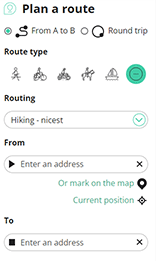
With RouteYou, it's easy to create your own customised maps. Simply plot your route, add waypoints or nodes, add places of interest and places to eat and drink, and then easily share it with your family and friends.
Route planner
<iframe src="https://plugin.routeyou.com/poiviewer/free/?language=en&params.poi.id=2542162&params.language=de" width="100%" height="600" frameborder="0" allowfullscreen></iframe>

More than 10,100,000 routes

More than 15,000,000 users

More than 4,500,000 points of interest

Kerkstraat 108
9050 Gentbrugge, Belgium
© 2006-2026 RouteYou - www.routeyou.com