Plant and animal species may lose their ability to adapt due to climate change. This is evident from the research by Marleen Cobben from Wageningen University. Cobben demonstrates through computer simulations that the genetic basis of plants and animals is deteriorating significantly due to climate change. This narrower genetic basis makes species more vulnerable, for example, to diseases. Fragmentation of landscapes and loss of natural areas only accelerate the decline of the genetic basis.
Cobben shows that climate change causes particularly the populations on the northern side of a species' distribution range to establish themselves further north. However, these populations contain less genetic variation than the populations found in the central part of the distribution range. As a result, the populations that settle further north become genetically poorer.
The populations in the central part of the distribution range have more genetic variation: many different variants of each gene are present. Cobben's research shows that this large genetic variation in these populations cannot migrate north quickly enough with the increase in temperature. If these populations go extinct, genetic variation is lost. And this loss is permanent: gene variants disappear forever from the species. Thus, the species as a whole also becomes genetically poorer.
The shrinking genetic basis of plant and animal species makes them more vulnerable to threats such as diseases. After all, there are fewer gene variants present, which reduces the likelihood that there is a gene variant that makes the plant or animal resilient to the threat. The species therefore loses its adaptability.
Cobben's computer simulations shed new light on the effect of climate change on wild plants and animals. It was previously thought that species unable to shift well would adapt to the new climatic conditions. You could say adaptation is an alternative survival strategy. But if the right gene variants cannot reach the right place quickly enough, plants and animals are less “climate-resilient” than previously thought.
According to Cobben, her findings underscore the importance of preserving or creating large natural areas and connections between natural areas. Cobben: “This buys us time. The preservation of genetic diversity for the species is linked to the survival of populations in the center of the distribution area. The longer they survive, the greater the chance that those gene variants can migrate north. If this migration is blocked by barriers in the landscape, genetic variation will decline even faster, making the species even more vulnerable to new threats such as diseases.”
Woodpeckers are easiest to find in early spring: they are active, make drumming sounds, and are easy to see as there are hardly any leaves on the trees yet.
Cobben conducted her research on the “Middle Spotted Woodpecker,” a woodpecker species that has been increasingly observed in the Netherlands in recent years. The Middle Spotted Woodpecker is a so-called ‘model species’, a species that is very suitable for such ecological research.
Address: Beernem
Statistics
Select one of the most popular activities below or refine your search.
Discover the most beautiful and popular trails in the area, carefully bundled into appropriate selections.
Select one of the most popular categories below or be inspired by our selections.
Discover the most beautiful and popular attractions in the area, carefully bundled in appropriate selections.
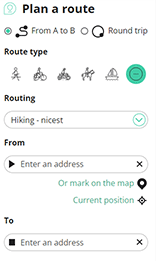
With RouteYou, it's easy to create your own customised maps. Simply plot your route, add waypoints or nodes, add places of interest and places to eat and drink, and then easily share it with your family and friends.
Route planner
<iframe src="https://plugin.routeyou.com/poiviewer/free/?language=en&params.poi.id=1764794" width="100%" height="600" frameborder="0" allowfullscreen></iframe>

More than 10,100,000 routes

More than 15,000,000 users

More than 4,500,000 points of interest

Kerkstraat 108
9050 Gentbrugge, Belgium
© 2006-2026 RouteYou - www.routeyou.com


 | | Public |