Datenquelle: Willem Vandenameele
The memorial to the victims of August 23, 1914 was inaugurated exactly 100 years later, on August 23, 2014, in the presence of the King and the authorities.
It is the work of the Brussels architects Kascen. Its shape resembles that of an ultra sober stele, like a monolith emerging from the ground in which a crypt is rooted.
The new monument commemorating the past replaces the original monument on Place d'Armes, Furore Teutonico, inaugurated in 1936 and destroyed by the Germans in May 1940.
This new memorial is a dome with an acute angle of 90°, which reflects the transept of the collegiate church in the background and fits into the urban context. Its dimensions are symbolically extrapolated from the numeral 674 ; the number of civilian casualties in Dinant.
Texts engraved on the walls intimately illuminate the space. These are the victims ' names, names that can only be read from within . This makes them appear to be cut into the Dinant sky and projected by the sun's rays onto the ground or onto the visitors themselves on a sunny day.
The victims' ages are indicated by a simple graphic design, with a square representing one year and a dash representing ten years.
The events of August 23, 1914:
On the morning of August 15, 1914, two German battalions invaded Dinant . On the same day they are expelled by the French. During these fighting, the young French lieutenant Charles de Gaulle (later General and President) was wounded. The inhabitants openly show their sympathy for the French.
When the first German scouts entered the city on the evening of August 21 , they immediately began killing civilians and setting fires. They are quickly driven off by the French , but the Germans cannot see who is shooting at them in the dark and are convinced they were mostly civilians .
On August 23 all hell breaks loose. The Germans launch a full-scale attack and it is immediately clear that they regard both the French and the residents of Dinant as enemies. Large-scale killings immediately ensue in various parts of the city. " This is not a military panic, but a systematic, premeditated annihilation of alleged civilian resistance ," said Irish historians John Horne and Alan Kramer.
In Leffe , many residents are dragged from their homes and imprisoned in the abbey church . 43 men are taken out and shot . In the afternoon, 22 men are taken out and shot in the basement of a textile factory where the workers and their families are hiding. For days the women are locked in the abbey church.
In another district , civilians are used as living shields to cross a square still under French fire, then locked in an iron foundry. There 19 men are shot and others are forced to shout "Long live Germany and long live the Kaiser". Here, too, 137 men and boys are being separated from their families. Dutch journalist Lambertus Mokveld describes the situation: “In vain the women begged for mercy for their husbands, their sons and their brothers ”, but the 137 men were shot against a garden wall. The "Tschoffen Wall" still stands as one of Dinant's monuments.
A total of 674 civilians are murdered in Dinant , almost 10% of the population. Among them are 26 older men, but also 76 women and 37 children. Three-week-old baby Félix Fivet is bayoneted to death.
More than 1,100 houses in the city are set on fire, including the city hall and a museum. The city is 80% destroyed . It is the largest massacre that the Germans inflicted on the civilian population in 1914.
Datenquelle: Willem Vandenameele
 | | Öffentlich | Deutsch • Dänisch • Französisch • Italienisch • Katalanisch • Niederländisch • Spanisch

Wählen Sie eine der beliebtesten Aktivitäten unten aus oder verfeinern Sie Ihre Suche.
Entdecken Sie die schönsten und beliebtesten Routen in der Gegend, sorgfältig gebündelt in einer passenden Auswahl.
Datenquelle: Willem Vandenameele
Wählen Sie eine der unten aufgeführten beliebtesten Kategorien oder lassen Sie sich von unserer Auswahl inspirieren.
Entdecken Sie die schönsten und beliebtesten Sehenswürdigkeiten der Gegend, sorgfältig gebündelt in einer entsprechenden Auswahl.
Datenquelle: Willem Vandenameele
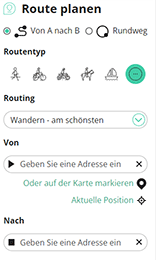
Mit RouteYou kannst du ganz einfach eigene Karten erstellen. Plane deine Route, füge Wegpunkte oder Knotenpunkte hinzu, plane Sehenswürdigkeiten und Einkehrmöglichkeiten ein und teile alles mit Familie und Freunden.
Routenplaner
<iframe src="https://plugin.routeyou.com/poiviewer/free/?language=de&params.poi.id=8405120&params.language=en" width="100%" height="600" frameborder="0" allowfullscreen></iframe>

Mehr als 11.800.000 Routen

Mehr als 15.000.000 Benutzer

Mehr als 4.500.000 Sehenswürdigkeiten

Kerkstraat 108
9050 Gentbrugge,Belgien
© 2006-2026 RouteYou - www.routeyou.com