Source: Jan Rymenams
We stand here at the buildings of the new guest houses from 1703. The hospital initially consisted of two adjacent halls, for men and women respectively: a first in a period when urban almshouses generally invested little in new construction.
This construction, however, needs to be viewed within the then political situation. The troops of Louis XIV occupied the Southern Netherlands. In our region, a defensive line was built - the so-called French Line - in which Aarschot had a pivotal role. Philippe V ordered that the urban hospitals should care for the sick soldiers. For a small hospital like Aarschot, the facilities were insufficient. Jean Anthoine Josier, Trésaurier Générale de l’extraordinaire des guerres, and his wife Françoise Rabaud provided the necessary funds. This was commemorated in a large memorial stone placed on the wall.
It was only during this period that a doctor was first attracted to assist the sisters. Before that, it was at best a surgeon.
From now on we speak of the Sint-Elisabeth Hospital. This name change was not coincidental. Many hospitals bear this name dedicated to Elisabeth of Thuringia.
Soldiers brought diseases with them. Already at the construction of this hospital, a separate burial ground was needed. A feared disease that traveled with the troops was the 'red flag' or dysentery, also referred to as the 'soldatensiecte'.
An extremely severe epidemic occurred in 1783. Due to the eruption of the Laki volcano in Iceland, it became a cold winter, a sulfur cloud was observed for months, and the harvest was poor. There was little drinking water available... Ideal conditions for an outbreak of dysentery in autumn.
On September 5, the first victim was buried in Aarschot, and on December 11, the last. In a short period of seven days, no less than 78 parishioners passed away.
The Aarschot city council praised, in a letter dated November 14, 1783, to the central authority in Brussels, the selfless and efficient efforts of the gray sisters. According to this letter, the disease was contained from the moment the city magistrate decided to send the sick to the hospital.
And this may well be true: isolating the sick in an environment where they were well cared for, especially washed, and received adequate food and drink, was essential for their recovery.
Source: Jan Rymenams
 | | Public | Danish • Dutch • French • German • Italian • Spanish

Select one of the most popular activities below or refine your search.
Discover the most beautiful and popular trails in the area, carefully bundled into appropriate selections.
Source: Jan Rymenams
Select one of the most popular categories below or be inspired by our selections.
Discover the most beautiful and popular attractions in the area, carefully bundled in appropriate selections.
Source: Jan Rymenams
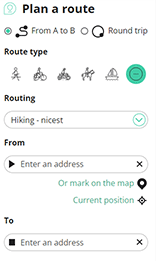
With RouteYou, it's easy to create your own customised maps. Simply plot your route, add waypoints or nodes, add places of interest and places to eat and drink, and then easily share it with your family and friends.
Route planner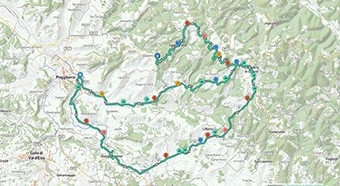
<iframe src="https://plugin.routeyou.com/poiviewer/free/?language=en&params.poi.id=8528570" width="100%" height="600" frameborder="0" allowfullscreen></iframe>

More than 10,100,000 routes

More than 15,000,000 users

More than 4,500,000 points of interest

Kerkstraat 108
9050 Gentbrugge, Belgium
© 2006-2026 RouteYou - www.routeyou.com