Datenquelle: Jan Rymenams
As you enter Leliestraat, you notice it immediately: the houses are simple and, unlike the other streets in the garden suburb, here we see once again a long row of connected terraced houses reminiscent of factory neighborhoods. Only the front gardens brighten up the whole.
It is a full-blown crisis when, at the beginning of the 1930s, architect Jozef Meeus (1908-1976) designs these simple houses. The original garden suburb idea was financially unfeasible during these years. The land had to be used to its maximum potential, and the houses are fully standardized. There is only one window on the upper floor. The wall above the door is a blind spot. The height of that floor is already lower. There has been a long-standing debate about the height of rooms in social housing. The lower the height, the less expensive materials needed to be used. But hygienists favored spacious, airy homes. The crisis made the difference.
It is also striking that only a few original window sills with slanted bricks have survived. These were replaced by straight hard stone. However, you do see a novelty here: on the west side of the houses – and thus on one side of the street – a cavity wall was provided. You can tell by the small ventilation grilles.
The houses are not completely unimaginative: The houses mirror each other. There is a rhythm of open and closed facade surfaces. The horizontal effect is emphasized by the continuous brick band; the door is set in a recessed frame.
A piquant detail is that the row of houses does not connect directly to the Chrysantenplein and was thus psychologically cut off from the rest of the garden suburb. You have to imagine that at the time of construction, the surroundings were still an open area consisting of wasteland, small fields, or meadows. It will be several decades later before the corner houses are built.
Adjacent to the Laak, there was a grocery store at number 27. It was advertised on the brown paper bags with ‘HOUSE OF TRUST’. Food products. Meats. Dairy products. Confectionery. Wines. Fresh VEGETABLES and FRUIT. Underwear. Work clothes. Smoking articles.
Aarschotenaar Jozef Meeus graduated in 1930 with great distinction from the Académie Royale des Beaux-Arts. He was a skilled draftsman who received several awards for his drawing skills. The houses on Leliestraat are quite atypical for him compared to the other houses in Aarschot that we know from him. Several of his residential designs are situated within the style of Nieuwe Zakelijkheid and De Stijl. A beautiful example is House De Zonnebloem on Bekaflaan. In 1941, he became head of the newly established Urban Planning Department of Aarschot. In 1939, he had already published a study on the future development of Aarschot. His successors will use this for the urban core renovations. After the war, he was accused of collaboration. He left Aarschot and moved to Hallaar, but was acquitted of all suspicion.
Datenquelle: Jan Rymenams
 | | Öffentlich | Deutsch • Dänisch • Französisch • Italienisch • Niederländisch • Spanisch

Wählen Sie eine der beliebtesten Aktivitäten unten aus oder verfeinern Sie Ihre Suche.
Entdecken Sie die schönsten und beliebtesten Routen in der Gegend, sorgfältig gebündelt in einer passenden Auswahl.
Datenquelle: Jan Rymenams
Wählen Sie eine der unten aufgeführten beliebtesten Kategorien oder lassen Sie sich von unserer Auswahl inspirieren.
Entdecken Sie die schönsten und beliebtesten Sehenswürdigkeiten der Gegend, sorgfältig gebündelt in einer entsprechenden Auswahl.
Datenquelle: Jan Rymenams
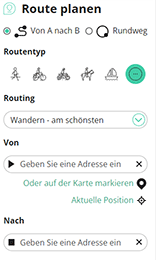
Mit RouteYou kannst du ganz einfach eigene Karten erstellen. Plane deine Route, füge Wegpunkte oder Knotenpunkte hinzu, plane Sehenswürdigkeiten und Einkehrmöglichkeiten ein und teile alles mit Familie und Freunden.
Routenplaner
<iframe src="https://plugin.routeyou.com/poiviewer/free/?language=de&params.poi.id=8548176&params.language=en" width="100%" height="600" frameborder="0" allowfullscreen></iframe>

Mehr als 10.100.000 Routen

Mehr als 15.000.000 Benutzer

Mehr als 4.500.000 Sehenswürdigkeiten

Kerkstraat 108
9050 Gentbrugge,Belgien
Kontaktieren Sie unser Kundendienstteam oder besuchen Sie unser Hilfezentrum.
© 2006-2026 RouteYou - www.routeyou.com