Source: Willem Vandenameele
La puerta fue construida alrededor de 1300 como parte de la muralla de la ciudad y servía tanto para defensa como para cobrar peajes.
El nombre hace referencia al cercano pueblo de Graach , al que daba acceso la puerta. Originalmente, la puerta tenía un suelo con aspilleras , salas de espera para los soldados y posiblemente un rastrillo o puente levadizo de madera.
En 1689 , la puerta fue parcialmente destruida por las tropas francesas bajo el reinado de Luis XIV. En 1714 , fue reconstruida y se le asignó una nueva función: prisión. Posteriormente, se utilizó como refugio para personas sin hogar.
En 1985 la puerta se transformó en un museo de historia local.
Source: Willem Vandenameele - ChatGPT
 | | Public | Catalan • Danish • Dutch • English • French • German • Italian

Select one of the most popular activities below or refine your search.
Discover the most beautiful and popular trails in the area, carefully bundled into appropriate selections.
Source: Willem Vandenameele
Select one of the most popular categories below or be inspired by our selections.
Discover the most beautiful and popular attractions in the area, carefully bundled in appropriate selections.
Source: Willem Vandenameele
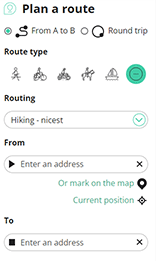
With RouteYou, it's easy to create your own customised maps. Simply plot your route, add waypoints or nodes, add places of interest and places to eat and drink, and then easily share it with your family and friends.
Route planner
<iframe src="https://plugin.routeyou.com/poiviewer/free/?language=en&params.poi.id=9095145&params.language=es" width="100%" height="600" frameborder="0" allowfullscreen></iframe>

More than 11,800,000 routes

More than 15,000,000 users

More than 4,500,000 points of interest

Kerkstraat 108
9050 Gentbrugge, Belgium
© 2006-2026 RouteYou - www.routeyou.com