No todas las partes de la nueva Wieringermeerpolder resultaron ser aptas para la agricultura. En el noreste de la polder, el nivel freático se mantuvo demasiado alto. Aquí, el suelo del antiguo Zuiderzee consistía además de arcilla, en terreno arenoso. Debido a la presión del agua del Waddenzee y el IJsselmeer, se produjo un afloramiento. El agua subterránea es empujada hacia arriba por una capa que contiene hierro y sal. Dado que estas áreas no son aptas para la agricultura, se plantaron árboles.
Así se formó un joven bosque, el Robbenoordbos. Lamentablemente, sin embargo, casi ningún árbol se mantuvo en pie, después de que el entonces ocupante hiciera volar el dique del IJsselmeer (17 de abril de 1945) y la Wieringermeerpolder se inundara nuevamente en 2 días. Tras el cierre del dique (5 de agosto de 1945) y el drenaje de la polder (11 de diciembre de 1945), todo fue replantado.
 | | Public | Danish • Dutch • English • French • German • Italian
Address: Wieringerwerf
Statistics
Select one of the most popular activities below or refine your search.
Discover the most beautiful and popular trails in the area, carefully bundled into appropriate selections.
Select one of the most popular categories below or be inspired by our selections.
Discover the most beautiful and popular attractions in the area, carefully bundled in appropriate selections.
With RouteYou, it's easy to create your own customised maps. Simply plot your route, add waypoints or nodes, add places of interest and places to eat and drink, and then easily share it with your family and friends.
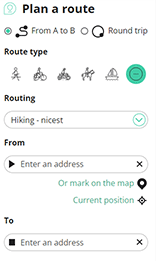
Route planner
<iframe src="https://plugin.routeyou.com/poiviewer/free/?language=en&params.poi.id=2530137&params.language=es" width="100%" height="600" frameborder="0" allowfullscreen></iframe>

More than 11,800,000 routes

More than 15,000,000 users

More than 4,500,000 points of interest

Kerkstraat 108
9050 Gentbrugge, Belgium
© 2006-2026 RouteYou - www.routeyou.com