Alla fine del tredicesimo secolo iniziò la costruzione di una piccola chiesa a navata, realizzata in pietra pomice. Sul lato nord c'era un'aggiunta che fungeva da sacrestia. Anche il campanile era composto da pietra pomice. Dopo il 1450, la chiesa romanica venne ampliata in stile tardo-gotico con mattoni, diventando una pseudobasilica con due navate laterali, coperta da una volta a botte in legno. Il campanile, alto cinquantacinque metri, fu costruito nel 1527, in uno stile derivato dalla Domtoren di Utrecht. Una torre praticamente identica fu costruita a Eemnes-Buiten. Nel sedicesimo secolo, sul lato sud, fu aggiunta una cappella.
Source: Wikipedia.org
Copyright: Creative Commons 3.0
 | | Public | Danish • Dutch • English • French • German • Spanish
Address: Utrecht, Netherlands
Statistics
Select one of the most popular activities below or refine your search.
Discover the most beautiful and popular trails in the area, carefully bundled into appropriate selections.
Select one of the most popular categories below or be inspired by our selections.
Discover the most beautiful and popular attractions in the area, carefully bundled in appropriate selections.
With RouteYou, it's easy to create your own customised maps. Simply plot your route, add waypoints or nodes, add places of interest and places to eat and drink, and then easily share it with your family and friends.
Route planner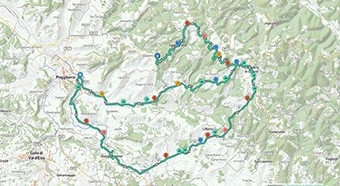
<iframe src="https://plugin.routeyou.com/poiviewer/free/?language=en&params.poi.id=1640272&params.language=it" width="100%" height="600" frameborder="0" allowfullscreen></iframe>

More than 11,800,000 routes

More than 15,000,000 users

More than 4,500,000 points of interest

Kerkstraat 108
9050 Gentbrugge, Belgium
© 2006-2026 RouteYou - www.routeyou.com