Root-Colony is a special area with a unique story. The Colonies of Benevolence tell a curious piece of history from the time when our regions were part of the Netherlands, between 1815 and Belgian independence in 1830. The Dutch general Johannes van den Bosch started an idealistic social experiment to combat poverty, but at the same time to keep people on the fringes of society, such as vagrants or beggars, in line.
At the beginning of the 19th century, a major social experiment took place in the United Netherlands. Goal: to eliminate poverty. The Society of Benevolence buys up unexplored land. Seven Colonies of Benevolence were established there: five in the north of the Netherlands and two in the south, those of Wortel and Merksplas. Large numbers of people and families in poverty are sent from all over the country to farm, attend school and learn discipline. Vagrants, beggars and also orphans are forcibly taken in.
The project was not successful and was abandoned after Belgian independence (1830). After the necessary adjustments, the Rijksweldadigheidskolonie started again in 1881 and became a home for vagrants and beggars. Until the First World War, there were five thousand vagrant-prisoners. After the abolition of the vagrancy law in 1993, the central buildings of the 'colony' were converted into prisons. The other buildings and grounds were given a new purpose.
The colonies had a very typical landscape that is still recognizable two hundred years after their creation. In 1822 the exploitation of the heath in the colony began. A rational and symmetrical plan divided the colony into two parts, separated by a wide road from Root to Zondereigen. The crossroads was the centre of the former colony and is referred to on old maps as 'Les Quatre Batiments'. Here were collective facilities: the director's house, the school, a company building with, among other things, a spinning mill and the warehouse.
There are now three buildings at this crossroads that date from the end of the 19th century, but have already been heavily modified: the vagrant farm with Visitor Center De Klapekster, the casino and a staff house. The last two buildings were leased by vzw Widar.
 Azure
Azure | | Public | Italien • allemand • danois • espagnol • français • néerlandais
Adresse: Kolonie 41, 2323 Hoogstraten, Vlaams Gewest, Belgique
Statistiques
Sélectionnez l'une des activités les plus populaires ci-dessous ou affinez votre recherche
Découvrez les plus beaux et les plus populaires itinéraires du secteur, soigneusement regroupés dans des sélections appropriées.
Source: visithoogstraten
Sélectionnez l'une des catégories les plus populaires ci-dessous ou inspirez-vous de nos sélections
Découvrez les plus beaux et les plus populaires points d'intérêt du secteur, soigneusement regroupés dans des sélections appropriées.
Source: visithoogstraten
Avec RouteYou, vous pouvez facilement créer vos propres cartes personnalisées. Tracez votre itinéraire, ajoutez des points de passage ou des points-nœuds, planifiez des points d'intérêt et des lieux de restauration, et partagez le tout avec votre famille et vos amis.
Planificateur d'itinéraire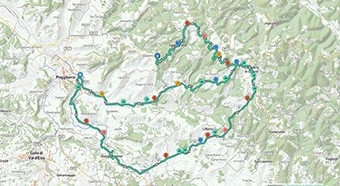
<iframe src="https://plugin.routeyou.com/poiviewer/free/?language=fr&params.poi.id=8364979&params.language=en" width="100%" height="600" frameborder="0" allowfullscreen></iframe>

Plus de 11 800 000 itinéraires

Plus de 15 000 000 d'utilisateurs

Plus de 4 500 000 points d'intérêts

Kerkstraat 108
9050 Gentbrugge, Belgique
© 2006-2026 RouteYou - www.routeyou.com