Source: Pascal Brackman


Lynn’s hinterland remained key to its success. In 1722, the travel writer Daniel Defoe noted that the Wash port had one of the most extensive inland navigation systems in England outside London, serving multiple counties with coal, wine, and provisions. Lynn became a major corn exporter, with granaries lining the river. However, it failed to develop significant manufacturing industries in the 18th century, and despite strong shipbuilding and brewing sectors, its population was only about 11,000 in 1801.
The population doubled between 1801 and 1851 as the market and port expanded, with East Anglia playing a leading role in supplying London and industrial regions. However, the arrival of the railways in the 1840s reduced Lynn’s geographical advantages as river and coastal transport declined.
 | | Public | Danish • Dutch • French • German • Italian • Spanish

Select one of the most popular activities below or refine your search.
Discover the most beautiful and popular trails in the area, carefully bundled into appropriate selections.
Source: Pascal Brackman
Select one of the most popular categories below or be inspired by our selections.
Discover the most beautiful and popular attractions in the area, carefully bundled in appropriate selections.
Source: Pascal Brackman
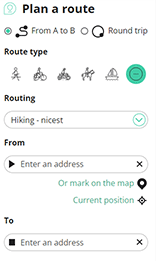
With RouteYou, it's easy to create your own customised maps. Simply plot your route, add waypoints or nodes, add places of interest and places to eat and drink, and then easily share it with your family and friends.
Route planner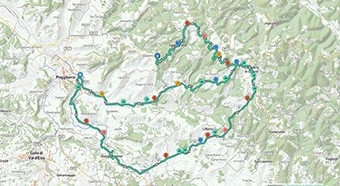
<iframe src="https://plugin.routeyou.com/poiviewer/free/?language=en&params.poi.id=9693177" width="100%" height="600" frameborder="0" allowfullscreen></iframe>

More than 11,800,000 routes

More than 15,000,000 users

More than 4,500,000 points of interest

Kerkstraat 108
9050 Gentbrugge, Belgium
© 2006-2026 RouteYou - www.routeyou.com