Source: Jan Rymenams
This school was built in the 1920s after the destruction of Aarschot during the First World War. It was built according to the prevailing principles at the time, in which the health of the children was an essential point. Not only were the classrooms spacious and airy, there was light through the high windows and there was running water, there was also a separate room for 'medical school supervision'. After all, one of the arguments against compulsory education was that bringing so many children together had to lead to the spread of diseases. It was not until 1913 that compulsory education was voted on and brought into force after the First World War. In 1921, medical school supervision and the responsibilities of the school doctor were regulated.
One of the tasks was to perform the scratch test to detect the 'tering' (tuberculosis).
This was one of the steps of the medicalization of our society. In fact, it had started with the regulation during the French rule in the early 19th century to vaccinate children against smallpox. In the 18th century, the 'children's pokskens' accounted for about 10 to 15% of deaths. For children even 90%!
This obligation did apply to the impoverished population. The wealthy bourgeoisie had a choice. During the Dutch period, the smallpox note came into vogue : without this certificate of vaccination, children were refused school or could not go to work on an apprenticeship. The state rewarded the doctors who are committed to "smallpox": when he had carried out 50 vaccinations, he received a medal. For Aarschot we know that the officer of health, Mertens, received it in 1833. By the way, it wasn't always doctors who did this. The number of doctors was low and therefore vaccinations could mainly be carried out by health officers and midwives. This is how midwife Mertens – family of? – in 1846 the medal. In 1908 they were deprived of this right.
Source: Jan Rymenams
 Azure
Azure | | Public | Danish • Dutch • French • German • Italian • Spanish

Select one of the most popular activities below or refine your search.
Discover the most beautiful and popular trails in the area, carefully bundled into appropriate selections.
Source: Jan Rymenams
Select one of the most popular categories below or be inspired by our selections.
Discover the most beautiful and popular attractions in the area, carefully bundled in appropriate selections.
Source: Jan Rymenams
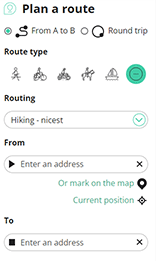
With RouteYou, it's easy to create your own customised maps. Simply plot your route, add waypoints or nodes, add places of interest and places to eat and drink, and then easily share it with your family and friends.
Route planner
<iframe src="https://plugin.routeyou.com/poiviewer/free/?language=en&params.poi.id=8528559" width="100%" height="600" frameborder="0" allowfullscreen></iframe>

More than 11,800,000 routes

More than 15,000,000 users

More than 4,500,000 points of interest

Kerkstraat 108
9050 Gentbrugge, Belgium
© 2006-2026 RouteYou - www.routeyou.com